


Saichiro Misumi: Remembering a life dedicated to India-Japan Friendship
In the history of India–Japan relations, few individuals have shaped people-to-people ties as deeply as Saichiro Misumi. Spanning war, independence, and modern diplomacy, his life reflected a rare commitment to cultural understanding and Asian solidarity. From his close association with Netaji Subhas Chandra Bose to decades of diplomatic and cultural engagement, Misumi emerged as a quiet architect of a friendship that continues to endure.

In the intricate fabric of international relations, certain personalities stand out not only for the political role they exercised but for the fact that they were able to connect people, cultures and histories, acting as an important bridge between nations. Saichiro Misumi is one among such exceptional figures whose life story is like a demonstration of a living testament to lasting friendship between two Asian nations: India and Japan.
Mr. Misumi, born in Japan on 16 June 1916, lived through more than one hundred years, witnessing and experiencing in his life story the global conflicts, ideological divides and cultural differences. Not only was he recognized by different titles and received various awards, but he also turned out to be a pioneer of cultural understanding and mutual respect between two countries that are geographically distant but culturally and aspirationally quite close.
Early Years to World War II
The very first steps in Saichiro Misumi's professional career were taken during a politically unstable period of time. Having graduated from Aoyama Gakuin University, he became a member (as secretary) of the Japan-India Association (JIA) in the year 1937, an organization of over 30 years then. The JIA, which is dedicated to promoting friendship between the two countries, is the oldest association of Japan with any country (established in 1903).
However, Saichiro Misumi's contribution went beyond mere paperwork. Through JIA activities, he came to know about Indian politics and got in touch with Netaji Subhas Chandra Bose, the great Indian freedom fighter. Saichiro Misumi played a main role in facilitating Bose's visit to Japan in June 1943, an event marking a crucial role in Indian-Japanese relations. He was also the one who arranged the lecture by Bose at Hibiya Hall in Tokyo. A politically charged occasion, but it was also a meeting of two freedom-seeking souls recognizing each other, symbolizing personal respect and admiration. The aspect that is often highlighted and referred to when discussing that time and recalling Saichiro Misumi is the fact that he not only did his work in a very professional and logistical manner, but also, and probably mainly, his relationship with Bose was very warm, sharing the same ideas.
Continuing and deepening friendship between the two nations
In the aftermath of World War II, when the world was turned upside down in terms of geopolitics and global power distribution, Saichiro Misumi still tried to keep the old bonds intact with the help of people with whom he had worked so closely during the war. The Japan India Association itself was prohibited from carrying out its activities by the Allied forces at first. He didn’t waver from his commitment in these tumultuous times and instead created a different opportunity. He established the "India-Japan Economic Promotion Committee" and was able to keep the spirit of bilateral cooperation alive through its operations.
After the signing of the bilateral peace treaty in 1952, the association resumed its original mission and name and Saichiro Misumi was given greater responsibilities in solving the problems arising from the various (cultural, economic and political) changes in both countries. He succeeded in doing that as the organization's Executive Director through a series of cultural, political and economic missions between India and Japan. Under his leadership, delegations travelled between the two countries. Artists, musicians and scholars formed bonds of cultural appreciation. Business executives boosted economic ties. And political figures found Saichiro Misumi a sympathetic, friendly, well-informed advocate for closer interaction between the two nations.
Saichiro Misumi’s contribution extended beyond diplomacy into economic reconstruction. In post-war Japan, he was instrumental in facilitating the import of iron ore from India, supporting Japan’s rebuilding efforts. He coordinated closely with Japanese companies operating in India, strengthening commercial linkages at a critical juncture. His organizational work was equally significant. Saichiro Misumi compiled and published business directories, edited the JIA Newsletter, compiling information related to the latest developments in both India and Japan. He also produced an annual catalogue introducing to India various Japanese products, providing essential information channels for bilateral trade and investment. These behind-the-scenes efforts laid durable foundations for bilateral economic cooperation. At the cultural level, Saichiro Misumi personally led Japanese cultural troops to India, believing that art, music and tradition formed the emotional core of diplomacy. Long before “cultural diplomacy” became a popular term, he practiced it as a lived principle.
Engagement with Indian Leadership
A notable feature of Saichiro Misumi’s career was his sustained engagement with India’s political leadership across generations. Beyond his association with Bose, he met Jawaharlal Nehru, Indira Gandhi, Atal Bihari Vajpayee, I. K. Gujral and K. R. Narayanan, reflecting the trust and respect he commanded in India.

In 1992, Saichiro Misumi visited Rashtrapati Bhavan and met President Shankar Dayal Sharma during celebrations marking 40 years of the India-Japan Peace Treaty (from the establishment of diplomatic ties in 1952). On this occasion, he gifted cherry blossom (Sakura) seedlings to the president, symbolizing peace and renewal and in return, was presented with lotus seeds from the botanical garden in Rashtrapati Bhavan, a gesture rich in Indian cultural symbolism.
Later in life, Saichiro Misumi remarked that meeting Prime Minister Narendra Modi (on 2 September 2014, during PM Modi’s official visit to Japan) reminded him of Subhas Chandra Bose, particularly in the emphasis on outward-looking Asian engagement. For Saichiro Misumi, both leaders embodied a shared vision similar to the Look East / Act East approach, rooted in Asian solidarity.

Recognition and Respect
The acknowledgment of Saichiro Misumi's decades of service comes from Japan and also the people and government of India, the country whose culture and history he had fully adopted. In 1990, Japan awarded him the 5th Order of the Sacred Treasure (The Zuihō Order, Gold and Silver Rays) for his meritorious contributions. The Government of India, on 30 March 2015, awarded him the Padma Bhushan (the country's third-highest civilian award- a rare distinction for a foreign national), at a Civil Investiture Ceremony, at Rashtrapati Bhavan, in New Delhi.
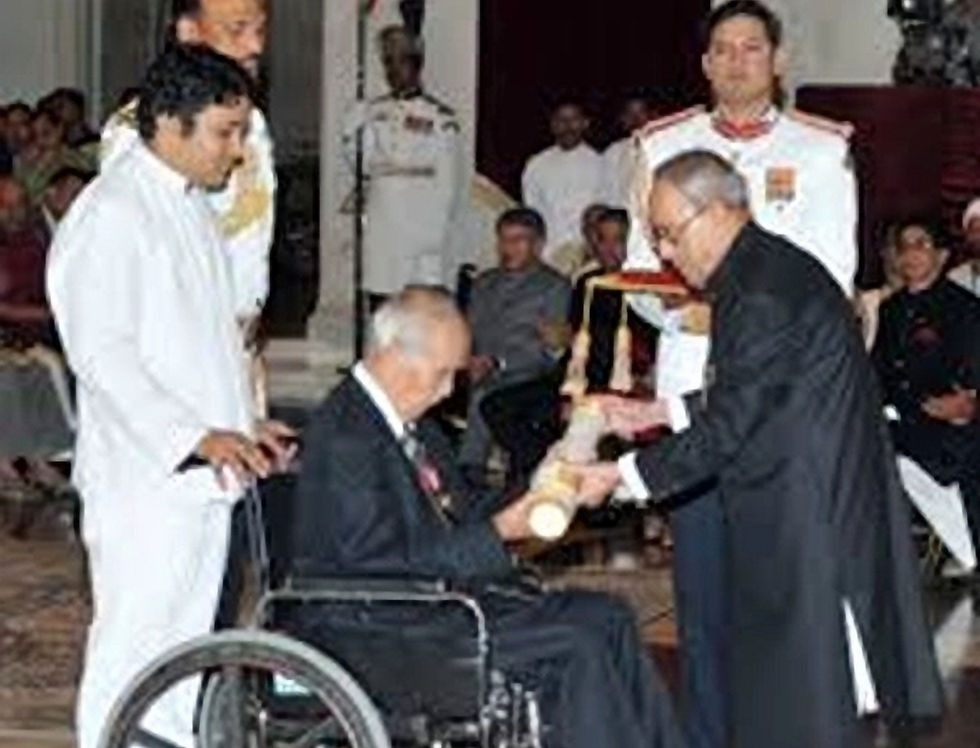
This award was not only for his formal roles. It was for his vision of friendship, his faith in cross-cultural understanding and his commitment to building a relationship based on mutual respect. The leaders and the public considered Saichiro Misumi as a living encyclopaedia of the "India-Japan relations, one whose life carries the very evolving narrative of the two nations coming closer across decades. Even during his later years, Mr. Misumi made it a point to attend events hosted by the Embassy of India in Tokyo, including the 69th Republic Day of India reception on 26 January 2018.

A Personal Touch: The Human Behind the Legend
In contrast to countless personalities in the arena of diplomacy and international relations, Saichiro Misumi was not simply a strategist; he was a deeply reflective individual. Moreover, he practiced yoga every day, a routine to which he attributed his remarkable longevity. Even into his old age, he kept his mind alert. He also used to read the Bhagwad Gita and derived spiritual insights and inspiration that shaped his way of thinking about India-Japan relations and informed his worldview in general.
In his discussions, he always stressed the significance of direct people-to-people interactions between the people themselves as the genuine core of any international friendship. For Saichiro Misumi, cultural exchanges were not merely decorative; they were vital parts of the social fabric that tightly connect different countries.
Legacy and Lasting Impact
Saichiro Misumi passed away in Tokyo on 23 February 2018, leaving a legacy far beyond his diplomatic roles. Today, he is thought of not only as a World War II veteran or an Indologist, but as a bridge-builder, someone whose life pertinently embodied the idea that international relations are primarily and ultimately about human connections. His work continues to inspire government officials, cultural envoys, and students of international relations who want to understand how countries grow closer, not only through formal agreements but also through trust and shared humanity.
In a world where geopolitical conflicts increasingly make headlines, the story of Saichiro Misumi is a perennial lesson: The first step to international friendship is genuine understanding between individuals.
About the Author
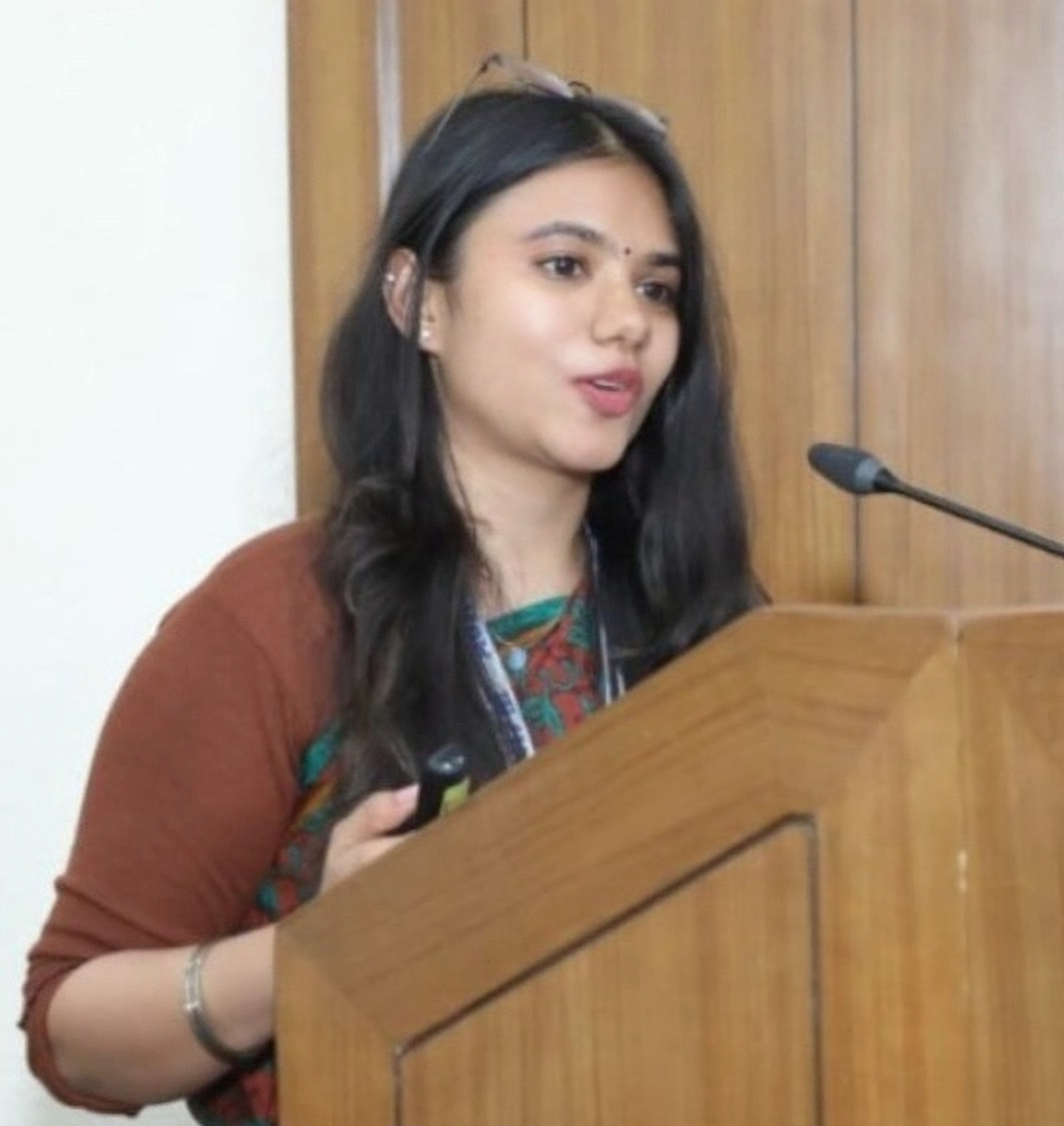
Kaveri Jain is a doctoral researcher in International Relations at the Amity Institute of International Studies, Amity University, Noida. Her work focuses on India-Japan relations during the Shinzo Abe era. She has presented at academic conferences, published in peer-reviewed platforms and written on various aspects of India-Japan ties, including foreign policy, technology cooperation, cultural exchange, diaspora diplomacy and engagement in the Indo-Pacific region.


Comments