


JECI and Tomorrow Foundation Launch Japanese Early Childhood Education Model to 187 Anganwadi Schools in West Bengal
Japan Education Center and Information Foundation (JECI) and Tomorrow Foundation have launched a pioneering initiative to introduce Japanese-inspired early childhood education practices across 187 Anganwadi schools in Birbhum, West Bengal. The project promotes foundational learning, sustainability, discipline, and responsible citizenship while advancing India-Japan educational cooperation.

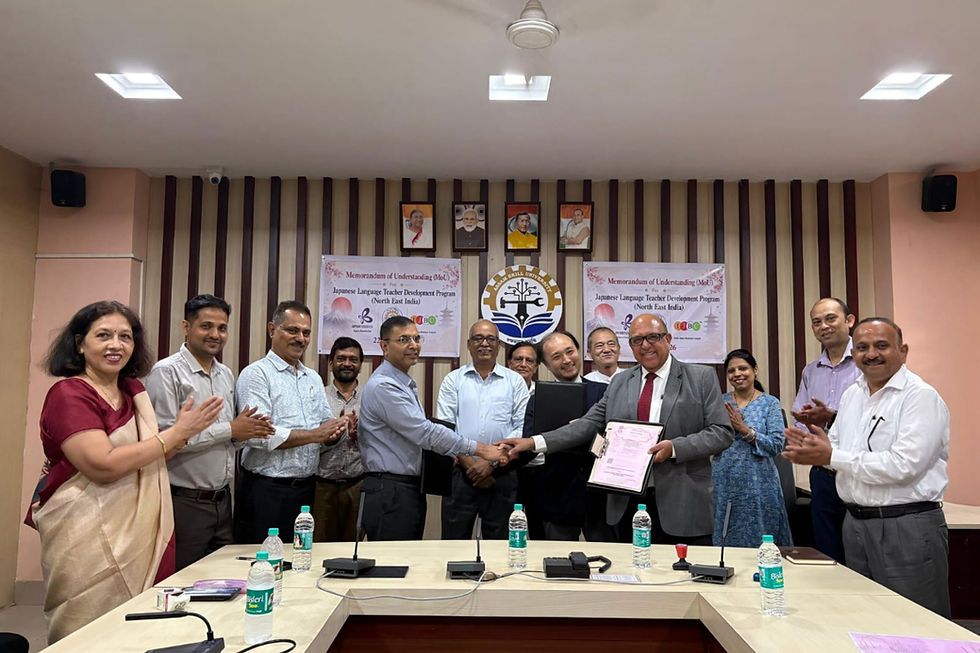
In a significant step toward transforming foundational learning and promoting sustainable, value-based education in India, Japan Education Center and Information Foundation (JECI) has partnered with Tomorrow Foundation to introduce Japanese early childhood education practices across 187 Anganwadi schools in Birbhum district of West Bengal.
The initiative marks a pioneering milestone in the evolution of grassroots education in India. For the first time, educational methodologies inspired by the Japanese school system will be systematically incubated and transferred into India's early childhood learning ecosystem, bringing globally recognized practices in discipline, cleanliness, teamwork, civic responsibility, and sustainability to young learners at the foundational stage.
A Landmark India-Japan Education Partnership for Foundational Learning
The collaboration between JECI and Tomorrow Foundation represents a new chapter in the growing India-Japan education partnership to introduce Japan education model in India. While bilateral cooperation between the two countries has traditionally focused on infrastructure, technology, manufacturing, and skill development, this initiative extends the relationship into the critical domain of early childhood development.
By introducing the Japan education model in India at the Anganwadi level, the project seeks to strengthen foundational learning in India while nurturing responsible, socially conscious, and environmentally aware citizens from an early age.
Education experts increasingly recognize that values, habits, and social behaviors developed during the formative years have a lasting impact on lifelong learning and citizenship. The Birbhum district education initiative seeks to address these dimensions through a holistic and practical learning framework inspired by Japanese educational excellence.
Bringing Japanese Pedagogy to Grassroots Education in India
Japanese pedagogy is globally respected for its emphasis on character formation alongside academic achievement. In Japan, schools are not merely places of instruction but institutions that cultivate discipline, cooperation, self-reliance, and community consciousness.
Through this initiative, children and educators across 187 Anganwadi schools in West Bengal will gain exposure to educational practices that encourage learning through participation, observation, responsibility, and daily habits.
Unlike conventional classroom-focused approaches, Japanese early childhood education emphasizes experiential learning, where children actively contribute to maintaining their environment, supporting peers, and participating in collective activities. These principles are expected to enrich the learning experience within Anganwadi centers and create a stronger foundation for future academic and personal development.
Aligning Educational Innovation with Sustainable Development Goal 4 (SDG4)
The project closely aligns with Sustainable Development Goal 4 (SDG4), which calls for inclusive, equitable, and quality education for all while promoting lifelong learning opportunities.
Beyond literacy and numeracy, SDG4 emphasizes the development of knowledge, skills, values, and attitudes necessary to build sustainable societies. The JECI-Tomorrow Foundation initiative directly supports this vision by integrating sustainable learning practices into the daily educational experience of young children.
Through practical lessons in environmental awareness, community responsibility, and ethical behavior, the program seeks to prepare children not only for academic success but also for meaningful participation in society.
In an era increasingly defined by climate challenges, social transformation, and global interconnectedness, such educational innovation in India can play an important role in shaping future generations capable of contributing positively to their communities.
Capt. Raj Adhikary’s Vision for Japanese Educational Excellence in India
The entire academic incubation and knowledge-transfer framework will be implemented under the leadership of Capt. Raj Adhikary, Founder of JECI, who has been a strong advocate of Japanese educational excellence in India since 2014.
Over the years, Capt. Adhikary has worked to promote educational frameworks inspired by Japanese schools, emphasizing values such as discipline, cleanliness, teamwork, social ethics, environmental stewardship, and civic responsibility from Kindergarten through Grade 12.
His vision is rooted in the belief that education must go beyond academic achievement and help shape responsible citizens capable of contributing meaningfully to society. By introducing these principles at the Anganwadi level, the initiative aims to create a strong foundation for lifelong learning and responsible citizenship education.
Lessons from the Japanese School System: Beyond Academic Learning
One of the distinguishing features of the Japanese school system is its focus on holistic education. Students are encouraged to take responsibility for maintaining classrooms, organizing activities, and contributing to their school community.
These practices help cultivate essential life skills including:
Discipline and self-management
Respect for others
Teamwork and cooperation
Responsibility toward shared spaces
Community participation
Environmental awareness
Leadership and problem-solving
The Japanese model demonstrates that education is not solely about academic performance but also about nurturing character, empathy, and social responsibility.
The Birbhum initiative seeks to adapt these principles to local realities while maintaining their core educational value, thereby creating a learning environment that promotes both personal growth and social development.
Supporting India’s National Priorities Through Holistic Education
JECI’s educational philosophy strongly complements several national development priorities, including Swachh Bharat Abhiyan, Skill India, Make in India, and initiatives focused on holistic child development.
The emphasis on cleanliness, hygiene, accountability, and social responsibility directly reinforces the objectives of Swachh Bharat. Similarly, the cultivation of teamwork, discipline, and problem-solving supports the broader goals of preparing future generations for productive participation in India's economy and society.
As India continues to invest in strengthening its education system under the National Education Policy framework, innovative models that combine academic learning with character development are becoming increasingly relevant.
This initiative illustrates how international best practices can be thoughtfully adapted to strengthen local educational outcomes.
Transforming Rural Education Through Practical and Life-Oriented Learning
A key feature of the program is its focus on practical and life-oriented learning experiences.
Children and educators participating in the initiative will engage with concepts such as:
Cleanliness and hygiene awareness
Waste segregation and environmental responsibility
Sustainable living practices
Teamwork and collaborative learning
Community responsibility
Energy conservation
Social behavior and mutual respect
Personal accountability and discipline
These lessons are designed to be integrated into daily routines rather than taught as isolated subjects, enabling children to learn through practice and experience.
Such an approach has the potential to significantly contribute to rural education transformation by making learning more meaningful, relevant, and connected to everyday life.
JECI’s Continued Commitment to Educational Transformation in India
JECI has been actively promoting Japanese-inspired educational initiatives in India since 2015. The organization has developed and delivered Japanese-style Swachh Bharat education programs for Kindergarten and K-12 schools, drawing inspiration from successful practices implemented in Japanese educational institutions.
Through workshops, curriculum development, educational exchanges, and awareness programs, JECI has consistently advocated for the integration of values-based learning within India's educational ecosystem.
The collaboration with Tomorrow Foundation represents an important expansion of these efforts, extending proven educational methodologies into early childhood and rural learning environments on a larger scale.
CSR-Led Knowledge Transfer and Capacity Building
An important aspect of the initiative is JECI’s commitment to implementing the program entirely under its Corporate Social Responsibility (CSR) framework.
The organization will provide curriculum guidance, educational incubation, orientation programs, capacity building, and knowledge-transfer support free of cost. No fees will be charged to Tomorrow Foundation for these services.
This approach reflects JECI’s broader mission of contributing to India’s development by sharing Japanese expertise, quality processes, and people-centric educational values with young learners across the country.
The CSR-led model also highlights how private institutions and civil society organizations can collaborate to create meaningful social impact through education.
Strengthening India-Japan Relations Through Education and People-to-People Connectivity
Education has long served as a powerful instrument for building mutual understanding between nations. This initiative strengthens India Japan collaboration not only at the institutional level but also through people-to-people engagement.
By introducing Japanese educational practices within Indian communities, the project creates opportunities for cultural exchange, knowledge sharing, and deeper understanding between the two countries.
Such grassroots engagement complements broader strategic cooperation between India and Japan in areas such as economic development, technology, infrastructure, and human resource development.
Over time, educational partnerships of this nature can contribute to stronger bilateral ties by fostering shared values and mutual respect among future generations.
A Model for the Future of Sustainable and Value-Based Education in India
The partnership between JECI and Tomorrow Foundation offers a compelling model for the future of value-based education in India. By combining the strengths of Japanese pedagogy with local educational priorities, the initiative demonstrates how global best practices can be adapted to address local developmental challenges.
As the program unfolds across 187 Anganwadi schools in West Bengal, it has the potential to emerge as a replicable framework for educational innovation in India. Its emphasis on responsible citizenship, sustainability, discipline, and holistic education aligns closely with the aspirations of a rapidly developing nation seeking to prepare its youth for the challenges of the twenty-first century.
More importantly, it reinforces the idea that education is not merely about acquiring knowledge but about shaping character, nurturing responsibility, and building a sustainable future. Through this landmark initiative, India and Japan are together investing in precisely that vision—one child, one classroom, and one community at a time.


Comments