


Japan’s Green Transformation: How Climate Action Can Drive Economic Growth

As the world struggles to balance economic growth with climate action, Japan is quietly demonstrating that the two goals do not have to conflict. Green Transformation (GX) strategy, Japan is turning decarbonization into an engine of industrial innovation, clean energy development, and economic competitiveness. From building a hydrogen-powered economy to investing billions in green technologies and resilient communities, Japan’s approach offers a powerful lesson: the transition to a low-carbon future can also become a pathway to prosperity.
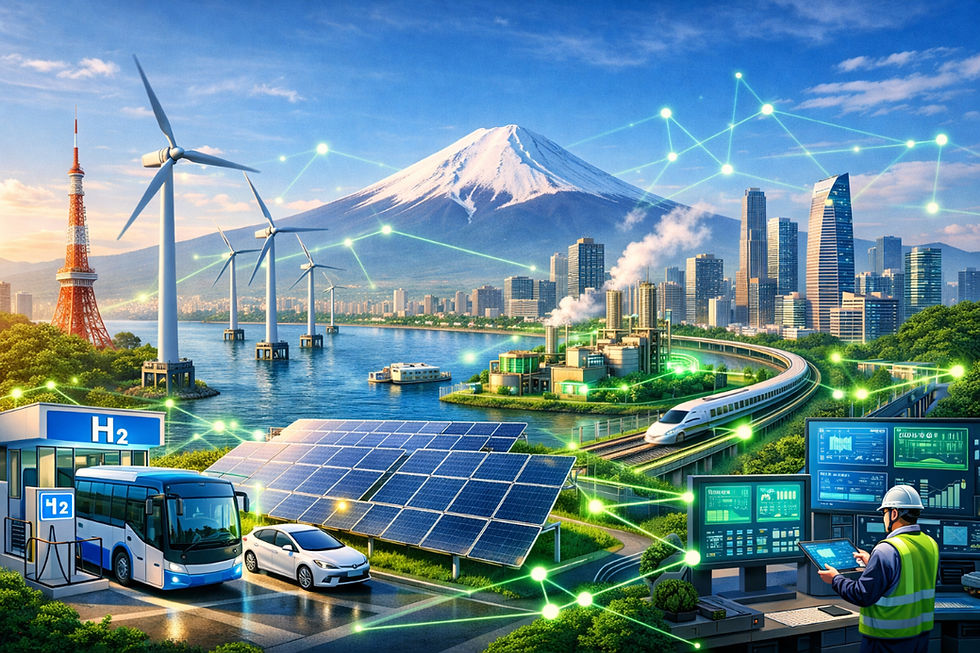
The world is dealing with a climate problem. While most people believe that stopping climate change will harm the economy, Japan leads the way with a balanced approach, achieving high economic growth without exacerbating climate change. Despite being an island starved of resources, Japan has used its problems to create new ideas.
Decarbonization as a Plan for Industry
Japan has a plan called Green Transformation. It does not see climate goals as mere rules to follow but rather as a way to help its economy grow. Japan is investing a lot of money, roughly around $140 Billion, to help businesses create ideas.
This plan changes how we think about climate goals by framing them as new and exciting economic opportunities. It sets an example for other nations to follow. Businesses will be encouraged to research and develop trailblazing ideas. Over time, they can create more environmentally friendly systems and remain competitive while transitioning from fossil fuels to renewable alternatives.
Investing in New Technologies
Japan has been working with green technologies, and it wants to create a "Hydrogen Society". This nudges the country toward using hydrogen in transportation, steelmaking, and power generation. These sectors are relatively challenging to transform, yet Japan has been progressing diligently.
Japan is also investing in. Sharing its knowledge of floating wind power and smart electrical systems. Countries that import a lot of energy should learn from Japan. Investing in technologies helps keep energy safe from problems like wars and changes in fuel prices.
Building Climate Strength in Communities
Climate action is not just about reducing greenhouse gases. It is about bracing for extreme weather events. Japan is second to none when it comes to creating disaster-resilient communities. Japan's stringent building rules help people adopt smart home energy systems and teach communities about risks, something other countries should learn from to build climate-resilient communities.
Why Does Japan's Example Stand Out?
For time immemorial, Japan has had energy problems and has been relying on imports for almost all its needs. On top of that, its uncompromising weather events have only worsened the situation. These are becoming problems everywhere. Japan’s approach lies in minimising harm without curbing its economic growth.
For all countries, irrespective of whether they are developing or have already developed, Japan's example teaches a clear lesson: environmental preservation does not necessitate economic sacrifice; rather, our perception of what "economic growth" ought to be, needs to change. Japan's shift in energy is a big and ongoing effort, but its main idea can work for everyone.
By using the energy transition as a chance to improve industries, technology, and society, global economies can ensure a livable climate and a prosperous and sustainable future. Japan's example establishes a middle ground between the two necessities of life and livelihood.
About the Author

Vishwaarav Srivastava, a student at Toyo University, Tokyo, is a proud recipient of the prestigious SDGs Ambassador Program at the university. Passionate about advancing the United Nations Sustainable Development Goals (SDGs), he actively contributes ideas and initiatives aimed at improving the SDG index for global community.
With a keen interest in sustainability, policy, and global development, Vishwaarav brings a fresh, thoughtful, and dynamic perspective to every piece of content he writes.


Comments