


Japan Honours INA Veteran Lt. Bharati Asha “Asako” Sahay Choudhury at Embassy Commendation Ceremony


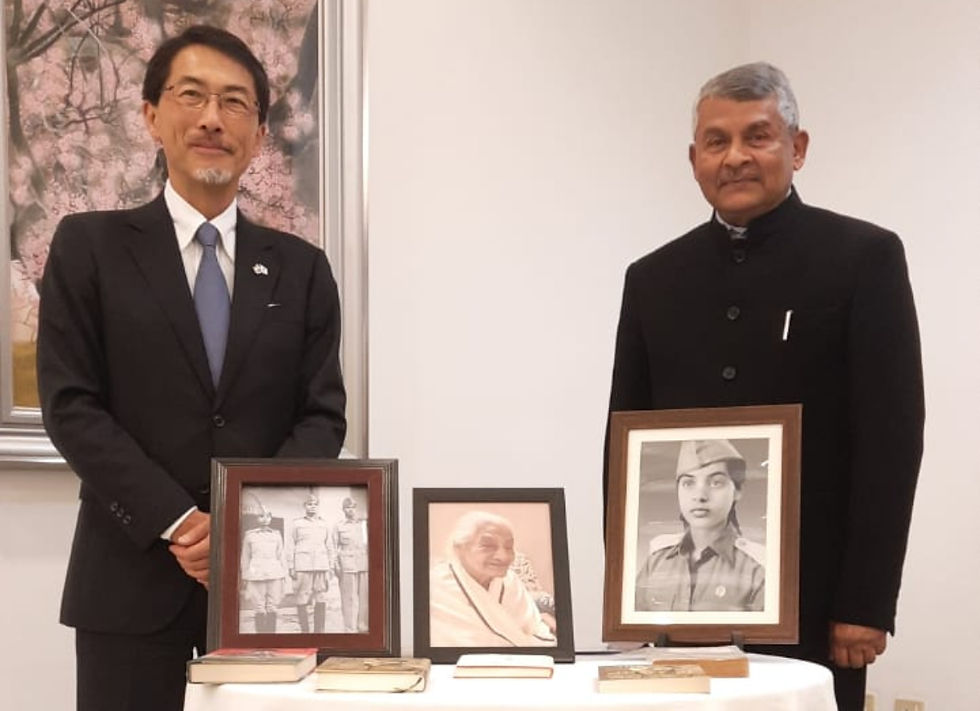
The life and legacy of Lt. Bharati Asha “Asako” Sahay Choudhury, a revered Indian National Army (INA) veteran and a lifelong symbol of India–Japan friendship, were formally honoured at a Commendation Ceremony held at the Embassy of Japan in India on December 17, 2025.
Organised by the Embassy of Japan, the ceremony brought together eminent personalities, diplomats, scholars, friends, and members of her family, reflecting the deep respect she commanded across generations and national boundaries. More than a formal tribute, the event stood as a collective act of remembrance—recognising a woman whose extraordinary life quietly shaped the shared history of India and Japan.
Commendation Ceremony at the Embassy of Japan
In recognition of her exceptional contribution to India’s freedom struggle and her lifelong efforts to strengthen Indo-Japanese relations, the Embassy of Japan honoured Lt. Bharati Asha “Asako” Sahay Choudhury with a special commendation.
The commendation certificate was received by her son, Sanjay Choudhry, on behalf of the family. The honour was presented by Ambassador of Japan to India, Keiichi Ono, who paid tribute to her courage, warmth, and unwavering commitment to fostering goodwill between the two nations.
The presence of distinguished guests from diplomatic, academic, and cultural circles, along with friends and family members, underscored the significance of her legacy and the enduring people-to-people foundation of India–Japan ties.
A Life Shaped by Two Civilisations
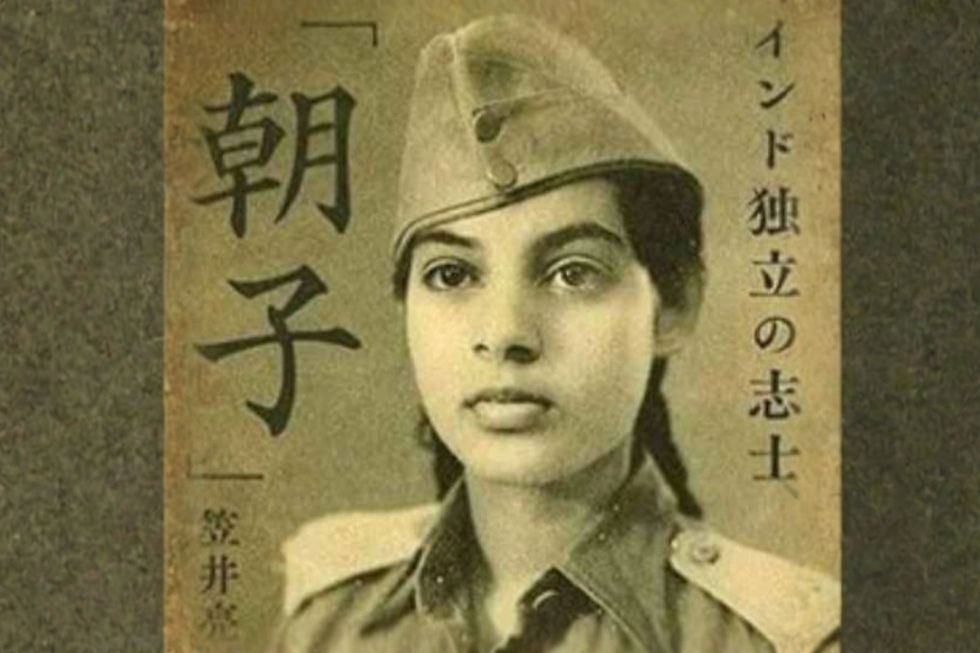
Born in Kobe, Japan, in 1928, to Indian parents, Bharati Asha Sahay grew up deeply immersed in Japanese society while remaining firmly rooted in India’s independence movement. She was educated entirely in Japan, studying at Showa Girls’ High School (now Showa Women’s University) in Tokyo, where she was affectionately known as Asako-san.
This bicultural upbringing gave her a rare perspective that later defined her role as a living bridge between Indian and Japanese cultures. Her family home was steeped in nationalist thought. Her father, Anand Mohan Sahay, was the founding secretary of the Indian Independence League (IIL)—an organisation that played a pivotal role in the formation of the Indian National Army.
Inspired by Netaji Subhas Chandra Bose
A defining chapter of her life began during her student years in Tokyo, when she met Netaji Subhas Chandra Bose. His vision of a free India and his call for active resistance left a profound impression on the young Bharati Asha.
In 1945, at the age of just 17, she made a courageous decision. Leaving Japan, she travelled via Taiwan to Bangkok, where she enlisted in the Rani of Jhansi Regiment, the INA’s historic all-women combat unit. She was commissioned as a Lieutenant, becoming one of the youngest members of the regiment.
From that moment on, she was known as Lt. Asha Sahay—a name that came to symbolise courage, resolve, and sacrifice.
A Woman Soldier in India’s Freedom Struggle
The Rani of Jhansi Regiment remains one of the most powerful symbols of women’s participation in India’s freedom movement. Lt. Asha Sahay belonged to a rare generation of women who defied convention and risked everything for independence.
Her experiences stand as living testimony to the role of women in India’s freedom struggle and to the often-overlooked India–Japan wartime connection, forged through shared resistance and mutual respect.
Life After Independence: Service Beyond the Battlefield
Following India’s independence, Lt. Asha Sahay settled in India after her marriage. Choosing a life of quiet contribution over public recognition, she worked as a Japanese interpreter and translator at Indosan Nipponji (the Japanese Temple) in Bodh Gaya—a site that itself symbolises centuries-old spiritual and cultural links between India and Japan.
She also documented her experiences through writing, ensuring that the memory of the INA, women soldiers, and Indo-Japanese solidarity would not fade with time. Through education, translation, and cultural engagement, she continued to strengthen India–Japan people-to-people ties long after the war had ended.
A Voice for India–Japan Friendship
Even in her later years, Lt. Asha Sahay remained deeply committed to cooperation between her two homelands. Reflecting on their shared heritage and future, she once said: “Both India and Japan have ancient histories. They should move forward together and become the greatest nations in the world.”
Her words captured a lifelong belief in collaboration, mutual respect, and shared destiny—principles that continue to guide India–Japan relations today.
Why Her Legacy Endures
In an era dominated by strategic calculations and formal diplomacy, the life of Lt. Bharati Asha “Asako” Sahay Choudhury is a reminder that the strongest international bonds are forged by people.
Her journey—from Kobe to the Indian freedom movement, and later as a custodian of India–Japan friendship—offers a powerful lesson in courage, empathy, and shared history. As India and Japan deepen cooperation across culture, technology, and strategic engagement, her legacy remains a moral anchor rooted in sacrifice and trust.
A Bridge That Still Stands
Lt. Bharati Asha “Asako” Sahay Choudhury was more than an INA veteran or freedom fighter. She was a bridge—between cultures, histories, and futures.
By honouring her at the Embassy of Japan in India, both nations reaffirm that their relationship is built not only on policy and partnership, but on individuals whose lives quietly shaped history. Her story will continue to inspire generations in India, Japan, and beyond, reminding the world that friendships between nations, once forged in courage, can endure across time.



Comments