


The 140th Birth Anniversary of Rash Behari Bose: A Forgotten Legacy
Long before India achieved independence, Rash Behari Bose had already internationalised the freedom struggle. A master strategist, underground revolutionary, and architect of transnational anti-colonial resistance, Bose transformed exile into opportunity — building alliances in Japan, shaping the foundations of the Indian National Army, and challenging the British Empire far beyond India’s borders. On his birth anniversary, revisiting his extraordinary journey is not just an act of remembrance, but a recognition of the global dimensions of India’s fight for freedom.

The conventional historiography of India’s independence frequently privileges the vocabulary of petitions, parliamentary negotiations and civil disobedience. While this narrative is historically valid, it often eclipses a parallel, clandestine struggle- a struggle that is defined by uncompromising resistance, global espionage and armed insurrection. Today, on the anniversary of his birth on May 25, 1886, engaging with the legacy of Rash Behari Bose is a necessary correction to a selective national memory and not just an exercise in historical nostalgia.
Rash Behari Bose was not simply a dissident; he was an early practitioner of transnational anti-colonial strategy. His life complicates the simplistic, manageable narratives of freedom, demanding a more nuanced understanding of how geopolitical opportunism and armed revolution contributed to the dismantling of the British Raj.
The Genesis of Radical Defiance
Born in Bengal, Bose came of age in an era where British India was sustained by racial hierarchy and systemic exclusion. An early source of his political radicalisation was the discriminatory colonial policy that barred Indians- particularly Bengalis, who were routinely stereotyped as "effete"- from military service. This humiliation fostered a lifelong preoccupation with martial preparedness and strategic discipline.

His transition from youthful defiance to organised rebellion crystalised in the French enclave of Chandernagore, a vital node for underground nationalist networks evading direct British surveillance. The first definitive demonstration of his strategic acumen occurred on December 23, 1912. As Viceroy Lord Charles Hardinge entered Delhi in a grand ceremonial procession, an improvised explosive was hurled at him by revolutionaries Basanta Kumar Biswas and Jorawar Singh Bareth. While the Viceroy survived with injuries, the symbolic damage to the Empire was absolute.
The brilliance of the 1912 Delhi conspiracy lay not just in the attack, but in its aftermath. Bose, the primary architect of the assassination attempt, seamlessly returned to his administrative job in Dehradun. Displaying remarkable psychological composure, he publicly condemned the bombing and even organised a welcoming committee for Hardinge upon his recovery, entirely deflecting British suspicion.
The Pan-Indian Mutiny and Flight to Exile
By the outbreak of the First World War, Bose identified a critical strategic vulnerability: empires are weakest when their military resources are diverted to global conflicts. He became a central orchestrator of the Ghadar revolution, aiming to trigger a coordinated, pan-Indian military revolt in 1915 involving army cantonments, coordinated sabotage, and expatriate Indian networks.
When the plot was compromised by informants, leading to swift executions and the collapse of the insurrection, Bose did not surrender. Instead, he initiated one of the most remarkable exilic journeys in modern history. Fleeing to Japan in 1915, under the alias of P. N. Tagore, he evaded British extradition efforts and began the painstaking work of internationalising India's liberation struggle.
The Transnational Strategist in Japan
Exile frequently diminishes revolutionary figures, reducing them to nostalgic irrelevance. For Bose, it functioned as a catalyst for geopolitical expansion. He integrated deeply into Japanese society, marrying into the sympathetic Soma family, and established networks with Pan-Asian intellectuals and political figures.
His life in Tokyo was marked by a fascinating synthesis of revolutionary action and cultural diplomacy:

The Nakamuraya Connection: To evade British extradition, Bose was sheltered by Aizo and Koko Soma, owners of the Nakamuraya bakery in Tokyo’s Shinjuku district. He eventually married their daughter, Toshiko, which also helped secure his Japanese citizenship in 1923. Beyond ensuring his safety, Bose transformed his exile into an act of true cultural intermingling.
At the time, the curry consumed in Japan was a mild, Europeanised variant introduced by the British Royal Navy. Viewing this as a colonial distortion of his heritage, Bose partnered with his father-in-law in 1927 to launch Indo-Karii at the bakery's restaurant.

The Nakamuraya bakery on Shinjuku’s central shopping street today and
Using authentic bone-in chicken and custom masala blends, he explicitly marketed the dish to reclaim Indian culinary identity from British hands. Despite being priced significantly higher than local variations, Bose's authentic curry became a massive phenomenon and remains a commercial cornerstone of Nakamuraya today.
Diplomatic Recognition: In 1943, the Japanese government awarded Bose the Order of the Rising Sun, Gold and Silver Star (2nd Class). Established by Emperor Meiji in 1875, this was one of the highest civilian decorations conferred by the Japanese state, typically reserved for extraordinary public service and outstanding state contributions. For a technically stateless revolutionary, receiving this honour was unprecedented. It was not merely a personal accolade but a calculated diplomatic victory that granted formal legitimacy to the Indian independence movement. Through decades of cultivating alliances with Japanese political and intellectual elites, Bose successfully elevated India's anti-colonial struggle from a fringe expatriate grievance to a recognised geopolitical priority within Pan-Asian diplomacy.
Institutional Frameworks: Bose understood that military insurrection required a robust administrative and political backbone. To that end, he became the chief architect of the Indian Independence League (IIL). While fragmented Indian expatriate associations already existed across Southeast Asia, Bose was instrumental in unifying them into a single formidable entity. In March 1942, he convened the pivotal Tokyo Conference, bringing together diaspora leaders to forge a cohesive political front, which laid the groundwork for the formal consolidation at the subsequent Bangkok Conference.
The IIL transformed into a massive apparatus that mobilised the Indian diaspora, secured their civil rights and rations under Japanese occupation, and served as the political counterpart to the embryonic ‘Indian National Army (INA)’ formed under Mohan Singh and the ‘Azad Hind Fauj’. It was this exact institutional blueprint and diplomatic leverage that Bose later selflessly handed over to Subhas Chandra Bose to amplify.

Nagma M. Mallick at Rash Behari Bose’s grave at the Tama Cemetery
Today, Ambassador of India to Japan, Nagma M. Mallick, was joined by Team India and members of the Indian community. Remembering the great freedom fighter whose contributions strengthened India-Japan ties and inspired India’s struggle for independence, they paid floral tributes to Rash Behari Bose at Tama Cemetery, Tokyo.
Rash Behari Bose passed away in Tokyo as a Japanese citizen on January 21, 1945, missing the dawn of Indian independence by a mere two years. He was a revolutionary who understood that anti-colonialism required global alliances, geographic breadth and intellectual depth. On his birth anniversary, reclaiming his narrative is essential in order to acknowledge the complete and complex spectrum of actors who engineered India’s freedom struggle and the fall of the British Empire.
About the Author
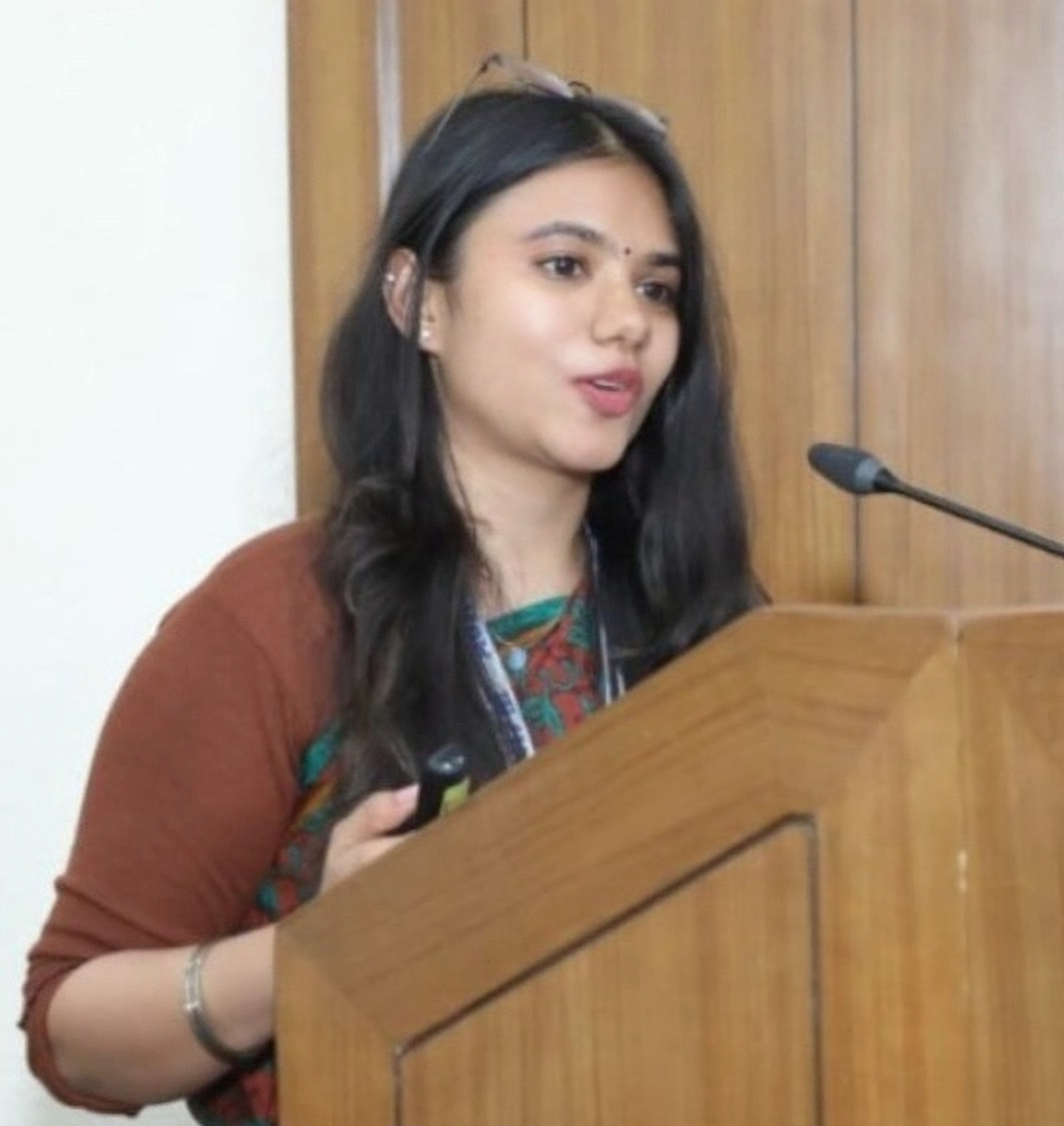
Kaveri Jain is a doctoral researcher in International Relations at the Amity Institute of International Studies, Amity University, Noida. Her work focuses on India-Japan relations during the Shinzo Abe era. She has presented at academic conferences, published in peer-reviewed platforms and written on various aspects of India-Japan ties, including foreign policy, technology cooperation, cultural exchange, diaspora diplomacy and engagement in the Indo-Pacific region.


Comments