


A Book That Reconnects History: Kolkata and West Bengal's Enduring Contribution to India–Japan Relations

Released at the 5th India–Japan Business Conference 2026, India–Japan Relations: Contribution of Kolkata and West Bengal highlights the personalities and historical connections that laid the foundation for today's trusted India–Japan partnership.

Business conferences are often remembered for investment announcements, trade discussions, and networking opportunities. Yet, at the 5th India–Japan Business Conference (IJBC) 2026 in Kolkata, one of the most memorable moments came not from a business presentation but from the unveiling of a remarkable publication that reminded everyone why India and Japan continue to enjoy one of Asia's strongest partnerships.
The release of "India–Japan Relations: Contribution of Kolkata and West Bengal" was much more than the launch of a commemorative booklet. It was a tribute to the people, ideas, and movements that connected India and Japan long before diplomatic agreements, industrial corridors, and strategic partnerships became the defining features of bilateral cooperation.
History That Still Shapes the Future
Prepared as a commemorative publication for the 5th India–Japan Business Conference, the booklet explores Bengal's remarkable contribution to India–Japan relations across culture, education, science, politics, law, literature, art, and intellectual exchange. Rather than presenting an exhaustive academic history, it offers readers an accessible journey through personalities and milestones that continue to influence contemporary India–Japan ties.
Its significance lies in a simple but powerful message: today's strategic and economic partnership between India and Japan stands on foundations laid by visionaries who believed in mutual respect, cultural understanding, and Asian solidarity.

Dr. Snehasis Sur's Presentation Became the Highlight of the Conference
One of the defining moments of the conference was the outstanding presentation by Dr. Snehasis Sur, senior journalist, President of the Press Club Kolkata, and the compiler and publisher of the booklet.
Far from being a routine introduction to a publication, Dr. Sur's presentation became an engaging historical narrative that captivated delegates from both India and Japan. Drawing from years of research, he connected forgotten stories, remarkable personalities, and historical events that collectively shaped one of Asia's oldest modern friendships.
His presentation demonstrated how Kolkata served not merely as a colonial metropolis but as an intellectual crossroads where Indian and Japanese thinkers, artists, scientists, educationists, and nationalists found common purpose. Through carefully curated historical episodes, Dr. Sur illustrated that India–Japan relations were built not only through diplomacy but also through shared ideals, cultural dialogue, and personal friendships.
The audience responded with deep appreciation, recognising that understanding history is essential to building the future of bilateral cooperation.
Business Partnerships Need Historical Foundations
The booklet carries a thoughtful message from Siddharth Deshmukh, President of the Indo-Japan Business Council, who observes that business partnerships become stronger when they are rooted in trust, respect, and a deeper understanding of each other's societies.
He notes that Bengal's relationship with Japan was shaped through spirituality, literature, art, education, science, political thought, legal memory, and cultural exchange—long before trade and technology became the dominant language of cooperation. Today, as India and Japan collaborate in manufacturing, technology, skilling, sustainability, education, and regional development, these contemporary partnerships continue to rest upon those earlier bridges created by scholars, artists, reformers, and leaders.
Kolkata: The Meeting Point of Two Civilisations
The publication places Kolkata at the centre of India's engagement with Japan during the late nineteenth and early twentieth centuries.
Long before official diplomatic relations, the city emerged as a meeting ground where Japanese intellectuals interacted with some of Bengal's greatest minds. It was here that pioneers such as Okakura Kakuzō, Yokoyama Taikan, Hishida Shunsō, and Jigoro Kano met towering Indian personalities including Rabindranath Tagore, Swami Vivekananda, Abanindranath Tagore, Gaganendranath Tagore, Sister Nivedita, and Jagadish Chandra Bose.
These exchanges profoundly influenced education, literature, artistic expression, philosophy, and the Bengal Renaissance while helping shape modern Indo-Japanese cultural relations.

Swami Vivekananda's Vision of Modern Asia
Among the earliest bridges highlighted in the publication is Swami Vivekananda's visit to Japan in 1893.
The booklet explains that Vivekananda admired Japan's extraordinary ability to modernise without abandoning its civilisational identity. He viewed Japan as an example for India—demonstrating that industrial progress and national development need not come at the cost of cultural values.
His observations inspired generations of Indian nationalists, particularly in Bengal, to view Japan as a model of Asian self-confidence and regeneration.

Rabindranath Tagore and the Idea of 'Asia is One
The publication devotes considerable attention to Rabindranath Tagore's deep intellectual engagement with Japan.
Tagore visited Japan several times, delivering lectures on civilisation, nationalism, and Asian identity. His exchanges with Japanese intellectual Okakura Kakuzō, who famously proclaimed that Asia is One, helped shape discussions on cultural revival and alternative paths to modernity beyond European influence.
Although Tagore later criticised Japanese militarism, his broader vision of cultural dialogue and mutual learning continues to influence India–Japan relations today.

Revolutionaries Who Connected Two Nations
The publication also revisits one of the most compelling chapters in Indo-Japanese history—the revolutionary journey of Rash Behari Bose.
Escaping British surveillance, Bose found refuge in Japan, where he became a Japanese citizen, organised the Indian Independence League, and laid the groundwork for later political cooperation with Netaji Subhas Chandra Bose.
The booklet explains how this relationship ultimately contributed to the formation of the Indian National Army and became one of the most significant political chapters connecting India and Japan during the Second World War.

Justice Radha Binod Pal: A Legacy Respected in Japan
Among Bengal's greatest contributions to Japan remains the enduring legacy of Justice Radha Binod Pal.
Serving on the International Military Tribunal for the Far East after World War II, Justice Pal issued his historic dissenting opinion questioning selective justice and retrospective criminality.
His judicial independence earned immense respect in Japan, where memorials continue to honour his contribution. Even today, Justice Pal symbolises intellectual courage and mutual respect between the two nations.
Sister Nivedita and the Bengal School of Art
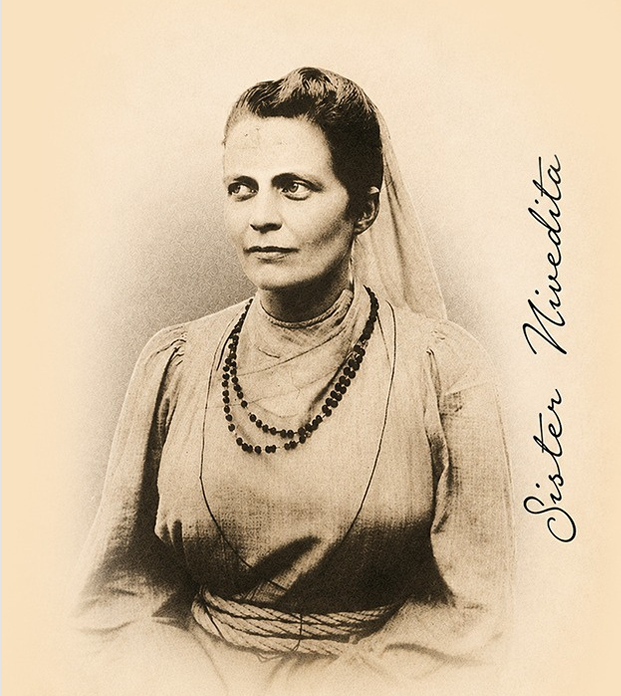
The booklet also shines light on the often-overlooked contribution of Sister Nivedita, who played an instrumental role in introducing Japanese artistic thought to Bengal.
Working alongside Okakura Kakuzō, she facilitated interactions between Japanese artists and members of the Tagore family. Her efforts encouraged Indian artists to embrace Japanese brushwork, minimalist composition, and spiritual symbolism—elements that later became defining characteristics of the Bengal School of Art.
These artistic exchanges strengthened the broader cultural partnership between India and Japan and continue to influence artistic scholarship today.
Science, Education and Intellectual Exchange
The publication extends beyond politics and culture to celebrate scientific collaboration.
It highlights pioneers like Jagadish Chandra Bose, whose scientific lectures in Japan strengthened academic exchanges, and Prafulla Chandra Ray, who admired Japan's scientific and industrial progress while advocating greater cooperation between researchers from both nations.
Equally important is the role of Santiniketan and Visva-Bharati, which welcomed Japanese scholars, artists, monks, and students, creating one of the earliest institutional platforms for sustained intellectual dialogue between India and Japan.
Lessons for Contemporary India–Japan Relations
Today's India–Japan relationship is frequently discussed in terms of semiconductors, high-speed rail, digital innovation, resilient supply chains, manufacturing, infrastructure, clean energy, and strategic cooperation.
The booklet reminds readers that while these contemporary collaborations are vital, they flourish because they are supported by something deeper—decades of trust, shared values, cultural curiosity, and mutual respect.
Understanding this historical foundation enriches modern partnerships and encourages future generations to view India–Japan cooperation as more than an economic relationship.
A Timely Contribution to Bilateral Understanding
In an era where strategic partnerships often focus on economics and geopolitics, India–Japan Relations: Contribution of Kolkata and West Bengal offers a refreshing reminder that enduring international relationships are ultimately built by people.
Through the remarkable research and engaging presentation of Dr. Snehasis Sur, delegates at the 5th India–Japan Business Conference 2026 were reminded that before investment corridors and industrial partnerships, there were philosophers, artists, educators, jurists, scientists, and freedom fighters who imagined a shared Asian future.
Their legacy continues to inspire contemporary cooperation—and this thoughtfully compiled publication ensures that their contributions will remain part of the continuing story of India and Japan.
For readers, scholars, policymakers, and business leaders alike, the booklet serves not merely as a conference publication but as an invitation to rediscover the historical bridges that continue to shape one of the Indo-Pacific's most trusted partnerships.
Soft copy of "India–Japan Relations: Contribution of Kolkata and West Bengal"


Comments