


Beyond Diplomacy: Building the Human Foundations of India–Japan Relations

Updated: Jun 7
The Japan-India International Exchange Symposium 2026 and the signing of the IPA–CMEC–JTTRI Memorandum of Understanding underscore a significant evolution in India–Japan relations. Beyond traditional diplomacy, the partnership is increasingly driven by people-to-people exchanges, tourism, maritime cooperation, research collaboration, and institutional connectivity. As both nations strengthen cooperation across the Indo-Pacific, these initiatives highlight a shared commitment to building resilient networks, enhancing connectivity, and fostering long-term strategic collaboration through knowledge exchange and human engagement.

India and Japan are often discussed through the lens of high politics—summit meetings, infrastructure projects, economic cooperation, and the Indo-Pacific. Yet the strength of any enduring bilateral relationship lies not only in government agreements but also in the institutions, ideas, and human connections that sustain it over time.
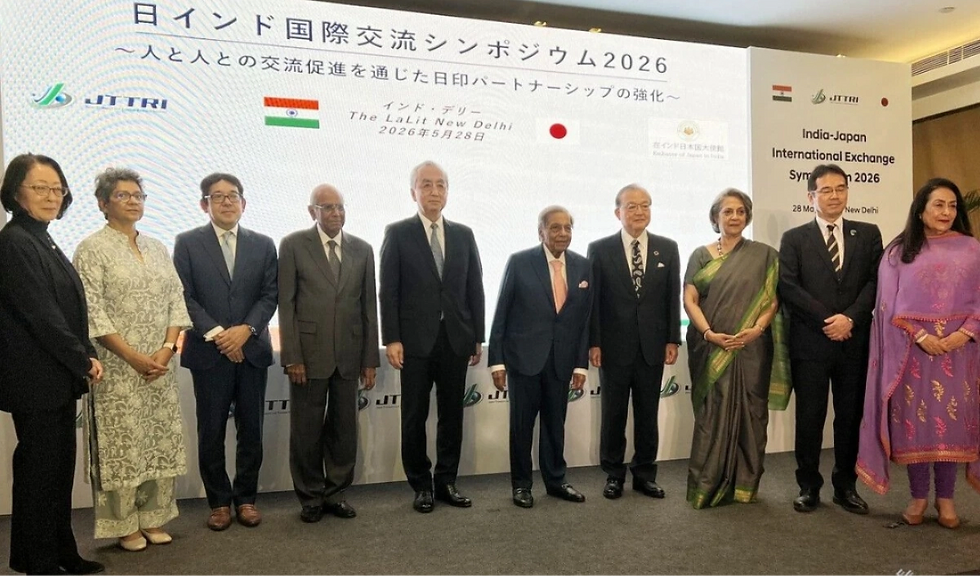
This reality was on display in New Delhi through two closely linked developments: the Japan-India International Exchange Symposium 2026 and the signing of a Memorandum of Understanding (MoU) among the Indian Ports Association (IPA), the Centre for Maritime Economy and Connectivity (CMEC) at RIS, and the Japan Transport and Tourism Research Institute (JTTRI).
At first glance, one event focused on people-to-people exchanges while the other centered on maritime cooperation. Viewed together, however, they reveal a deeper transformation underway in India–Japan relations—one that is increasingly driven by institutional partnerships, knowledge exchange, connectivity, and long-term collaboration.
The message emerging from both events is clear: the future of the India–Japan Special Strategic and Global Partnership will be built as much through human networks and intellectual cooperation as through trade, infrastructure, and geopolitics.
Beyond Diplomacy: Building the Human Foundations of India–Japan Relations
Opening the Japan-India International Exchange Symposium 2026, JTTRI Chairman SHUKURI Masafumi reminded participants that the relationship between India and Japan extends far beyond contemporary diplomacy.
He traced the origins of bilateral exchanges to the transmission of Buddhism from India to Japan in the sixth century, highlighting how cultural and spiritual interactions laid the foundations for centuries of mutual understanding. He also recalled the visits of Rabindranath Tagore to Japan and the deep respect with which the Nobel Laureate was received by Japanese society.
These historical connections continue to resonate today. Cultural exchanges have expanded steadily through literature, education, cuisine, tourism, cinema, and academic engagement. Chairman SHUKURI pointed to the remarkable popularity of the Indian film RRR in Japan as an example of how contemporary cultural interactions are bringing the societies closer together. He also noted the growing familiarity of Indian cuisine in Japan and Japanese washoku in India, reflecting an increasingly vibrant cultural relationship.
Yet the significance of people-to-people exchanges extends beyond cultural appreciation. As SHUKURI observed, international exchanges provide opportunities to encounter different cultures, institutions, and values while strengthening appreciation for one's own traditions. Such interactions can influence how people think and act, creating positive societal transformation through greater understanding and mutual respect.
In an era of geopolitical uncertainty, these human connections are becoming strategic assets.
Tourism, Culture and the New Era of International Exchange
Tourism has emerged as one of the most dynamic dimensions of India–Japan engagement.
The designation of April 2023–March 2025 as the Japan–India Tourism Exchange Year demonstrated the commitment of both governments to strengthening tourism ties through coordinated public and private sector initiatives. The number of Indian visitors to Japan has been rising steadily, while interest in Japan among Indian travelers continues to expand.
Particularly noteworthy is the potential for Buddhist tourism. As countries connected through one of Asia's most influential spiritual traditions, India and Japan possess unique opportunities to create tourism experiences that combine heritage, culture, and education.
SHUKURI also revealed that discussions with India's Minister of Tourism had led to an agreement to continue working-level consultations through a dedicated joint mechanism to advance future tourism cooperation.
Such initiatives illustrate how tourism is evolving from a purely economic activity into a powerful instrument of diplomacy and cultural connectivity.
Maritime Cooperation and the Indo-Pacific Imperative
While people-to-people exchanges build trust, maritime cooperation increasingly provides the strategic framework within which India and Japan pursue shared interests.
Both countries occupy pivotal positions in the Indo-Pacific, one of the world's most consequential maritime regions. Secure sea lanes, resilient supply chains, efficient ports, and sustainable maritime development are now central to economic prosperity and regional stability.
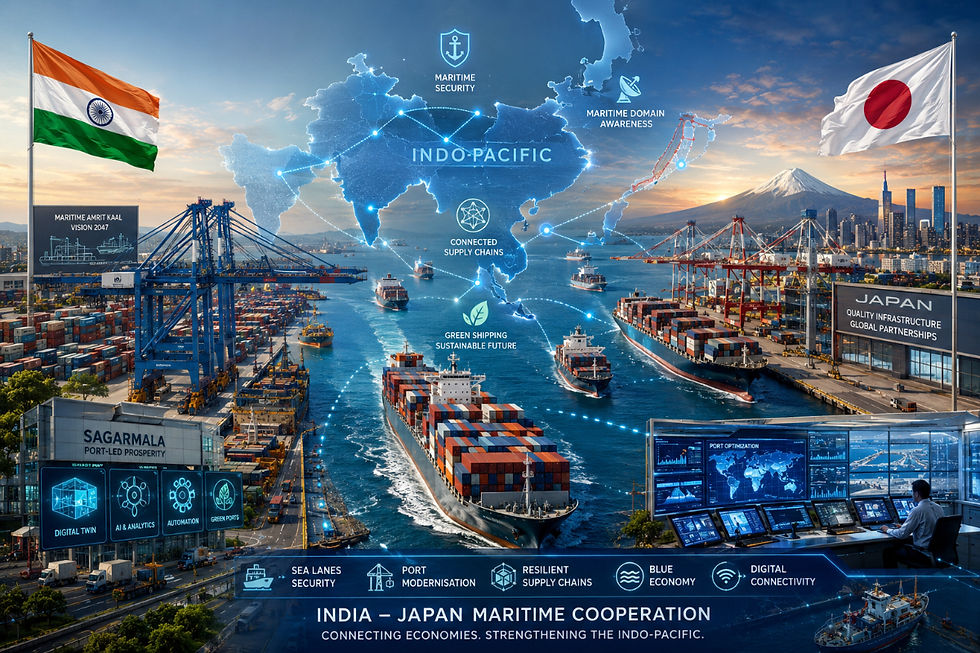
At the signing of the IPA–CMEC–JTTRI MoU, Chairman SHUKURI emphasized that both Japan and India are fundamentally maritime nations. Japan has built its prosperity through maritime trade and international exchange, while approximately 95 percent of India's trade volume depends on maritime transport. Both countries therefore have a shared interest in maintaining secure and efficient maritime connectivity.
This convergence aligns naturally with India's SAGAR vision and Japan's Free and Open Indo-Pacific strategy. Together, these frameworks promote connectivity, maritime security, infrastructure development, and rules-based cooperation across the region.
As geopolitical competition intensifies and supply chains become more vulnerable to disruption, maritime cooperation has become indispensable to both countries' strategic outlook.
Why the IPA–CMEC–JTTRI Partnership Matters
The MoU signed between IPA, CMEC, and JTTRI represents far more than a ceremonial agreement.
By creating a structured framework for academic exchanges, joint research, policy dialogue, and knowledge-sharing, the partnership establishes an institutional foundation for long-term maritime cooperation.

SHUKURI noted that growing instability in the international order, disruptions to global shipping, challenges in the Strait of Hormuz, and the urgent need for decarbonization underscore the importance of international collaboration. He argued that such complex challenges cannot be addressed by any single nation and require coordinated efforts, shared expertise, and collaborative research.
The new partnership is designed precisely for that purpose.
Through collaborative studies, joint seminars, research exchanges, and policy engagement, the three institutions can contribute to better port management, logistics efficiency, maritime sustainability, and regional connectivity.
Importantly, the agreement also strengthens the intellectual infrastructure supporting India–Japan cooperation in the Indo-Pacific.
Institutions as the New Drivers of India–Japan Relations
One of the most significant trends in contemporary India–Japan relations is the growing role of institutions. While governments provide strategic direction, long-term partnerships are increasingly being sustained by universities, research institutes, industry associations, cultural organizations, and policy think tanks.

JTTRI's engagement with India reflects this evolution. Before the IPA–CMEC partnership, JTTRI had already concluded cooperation agreements with Gati Shakti Vishwavidyalaya and the National Maritime Foundation, creating collaborative frameworks covering both transport and maritime domains.
Together, these partnerships are helping create a durable ecosystem of knowledge exchange and policy collaboration that extends well beyond individual projects or political cycles.
Such institutional linkages provide continuity, generate expertise, and build trust—essential ingredients for any mature international partnership.
A New Delhi Hub for South Asia
Perhaps the most significant announcement emerging from both events was JTTRI's plan to establish a permanent office in New Delhi.
Chairman SHUKURI described the proposed office as a platform for strengthening cooperation not only with India but also with stakeholders across South Asia. The office is expected to support research collaboration, policy dialogue, transportation cooperation, tourism initiatives, and broader regional engagement. The decision reflects India's growing importance in Japan's regional strategy and signals JTTRI's long-term commitment to the region.
Beyond administrative functions, the office could become an important hub connecting policymakers, researchers, industry leaders, and educational institutions across South Asia.
In many ways, it represents the institutional embodiment of the broader trends discussed throughout the symposium and reflected in the maritime partnership agenda.
From Strategic Partnership to Shared Future
The Japan-India International Exchange Symposium 2026 and the IPA–CMEC–JTTRI MoU signing may have addressed different subjects, but together they tell a common story.
They illustrate how India–Japan relations are evolving from strategic dialogue to practical cooperation; from government-led initiatives to multi-stakeholder partnerships; and from isolated projects to integrated ecosystems of exchange and collaboration.
People-to-people exchanges build understanding. Tourism creates familiarity. Research partnerships generate knowledge. Maritime cooperation strengthens connectivity. Institutions provide continuity.
Together, they form the foundations of a relationship capable of addressing both contemporary challenges and future opportunities.
As the Indo-Pacific continues to shape the global strategic landscape, India and Japan are increasingly demonstrating that sustainable partnerships are built not only through shared interests, but through shared institutions, shared knowledge, and shared human connections.
The symposium and the maritime MoU are therefore not isolated events. They are markers of a broader transformation—one that positions India and Japan to play a larger role in fostering a more connected, resilient, and inclusive Indo-Pacific.


India does need Japan and vice versa. We stand to gain immensely. No doubt about that !