


The Uttar Pradesh-Yamanashi Partnership: A Beacon for Sub-National Diplomacy
From green hydrogen to ancient pilgrimage routes, the Uttar Pradesh–Yamanashi partnership is redefining how diplomacy works in the 21st century. Rooted in shared Buddhist heritage and driven by local economies, this sub-national collaboration shows how India–Japan ties are moving beyond capitals to connect people, culture, and opportunity on the ground.
The evolving partnership between Uttar Pradesh and Yamanashi is more than a regional agreement. It is a live laboratory for sub-national diplomacy. By moving beyond the high-level corridors of New Delhi and Tokyo, the relationship grounds the India-Japan "Special Strategic and Global Partnership" in local economies and shared heritage. A compelling story is unfolding between the fertile heartlands of Uttar Pradesh and the serene landscapes of Japan’s Yamanashi Prefecture. It is a partnership that suggests a rethinking of 21st-century diplomacy- one that counts the steps of pilgrims walking a path laid down two millennia ago.
The Yamanashi - UP Connection presents a new template
In December 2024, Uttar Pradesh and Yamanashi Prefecture of Japan signed a Memorandum of Understanding for cooperation in industrial, tourism and vocational education. In a recent meeting in Lucknow, Chief Minister Yogi Adityanath met a delegation from Yamanashi Prefecture, led by Vice Governor Junichi Ishidera, to discuss advanced cooperation and the effective implementation of this MoU. The development is expected to further strengthen the strategic partnership between India and Japan.

While the formal discussions centered on green hydrogen and industrial implementation, the meeting also included conversations that highlighted shared cultural values that make this bond possible and stronger. As Uttar Pradesh’s minister for tourism and culture, Jaiveer Singh, noted, “Japan today is looking to invest not just capital, but also trust into destinations that offer authenticity, wellness, philosophy and refined cultural experiences. Uttar Pradesh is uniquely positioned to absorb and multiply that interest".
This momentum can be linked to an earlier meeting on February 13, 2025, when a delegation from Japan's Yamanashi Prefecture, led by then Vice Governor. Ko Osada, met with Uttar Pradesh (UP) officials to explore investment opportunities in the hospitality sector under the state's Buddhist Circuit. In this discussion, both sides committed to promoting tourism, strengthening cultural bonds and developing world-class infrastructure- particularly within the Buddhist Circuit.
A Modern Spiritual Bridge: The Buddhist Circuit
At the centre of this cultural collaboration lies the Buddhist Circuit. Often relegated to the realm of tourism statistics. But to view it merely as a collection of archaeological sites is to miss the heartbeat of the relationship. This is truly a network of philosophy and civilisational memory.
Some of the main Buddhist sites in and around Uttar Pradesh:
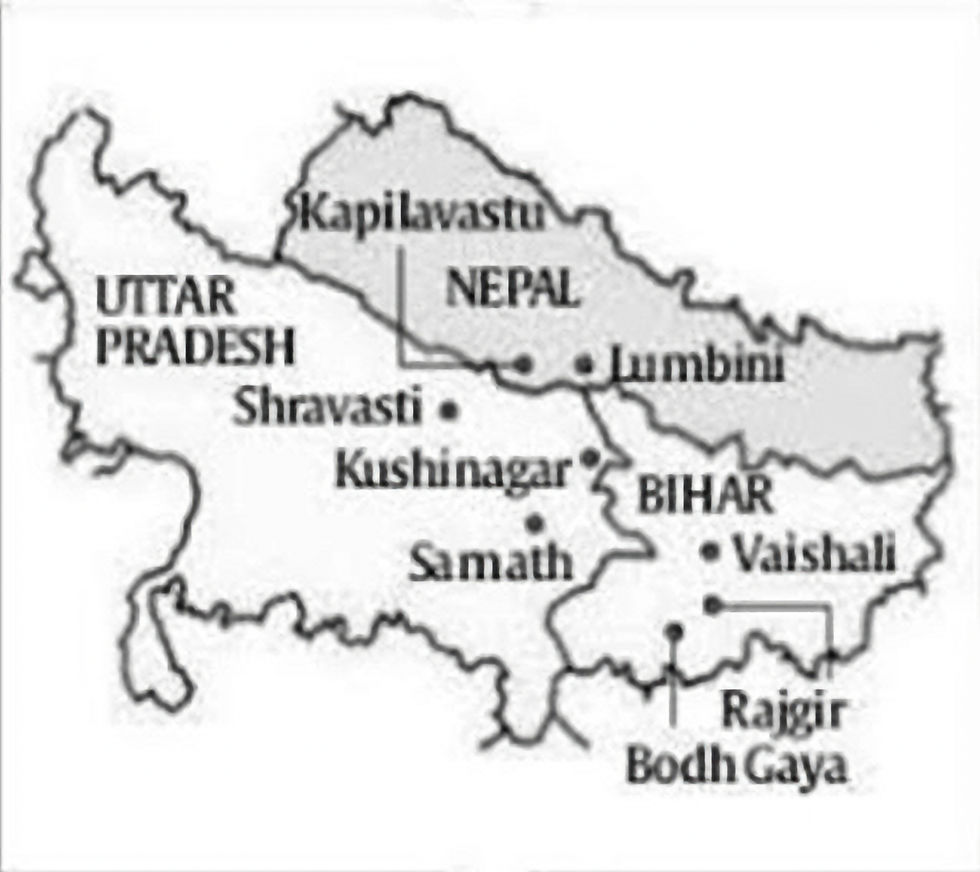
Kapilvastu (Lumbini, Nepal): the birthplace of Buddha
Bodh Gaya (Bihar): the most important Buddhist pilgrimage site, where Gautama attained enlightenment under the Bodhi tree.
Sarnath (Uttar Pradesh): Buddha gave his first sermon here after attaining enlightenment, setting the wheel of Dharma in motion
Kushinagar (Uttar Pradesh): Buddha met his death and attained Parinirvana.
Rajgir and Nalanda (Bihar): Buddha spent a lot of time here giving sermons.
Vaishali- Buddha visited many times and spent most of his life preaching and teaching people, also founded a monastic order in Vaishali.
For Japan, where Buddhist traditions have shaped the social fabric for over 1,400 years and where the Indian monk Bodhisena performed the consecration ceremony of the towering statue of Buddha at Todaiji temple in Nara (752 A.D.), the sacred sites of Uttar Pradesh are the source code of a cultural identity. They represent the origins of Japan’s Buddhist civilizational identity. When a Japanese visitor arrives in Uttar Pradesh, they are not a tourist alone but a pilgrim seeking a deeper connection with the historical source of a faith that travelled from India through Asia and became deeply embedded in Japanese culture.
But why Yamanashi?
Beyond its breathtaking views of Mount Fuji, Yamanashi represents a prefecture where cultural heritage and technological innovation coexist. In the economic context, Yamanashi is an ideal partner for Uttar Pradesh because it represents a model of regional development where high-value tourism, clean technology and precision industry operate together.
Known globally for Mount Fuji tourism, the prefecture has also cultivated expertise in sustainable infrastructure planning, renewable energy initiatives and advanced manufacturing ecosystems. Uttar Pradesh, in contrast, is actively expanding its investment base while simultaneously upgrading its tourism infrastructure, skilling ecosystem as well as heritage management capacity. This creates a clear complementarity: Yamanashi offers technical know-how and innovation-driven investment, while Uttar Pradesh offers scale, heritage-based tourism potential and an emerging industrial market.
In this sense, the partnership is not symbolic alone but it is economically strategic and diplomatically rational. Japanese investments in the field of digital reconstruction of ancient monuments, interpretive museums and sustainable tourism infrastructure can strengthen people-to-people connections between the two nations.
Why This Matters: The Abe Legacy and Beyond
When we look at the budding partnership between U.P. and Yamanashi, it can be said that this partnership reflects the continued relevance of the "Abe Doctrine" for India-Japan relations. The late Shinzo Abe was more than a statesman to India. He was a bridge-builder who believed that the two Asian democracies deeply shaped by Buddhist civilisational traditions held key importance to global peace. He famously spoke of the "Confluence of the Two Seas," but for him, this confluence was as much about the spirit as it was about the Pacific and Indian Oceans. In this context, Abe’s legacy is not only strategic but also civilisational.
Abe’s connection to Uttar Pradesh was deeply personal. In 2015, standing on the banks of the Ganga in Varanasi, he didn't just witness a ritual. He participated in the heartbeat of a culture he deeply respected. His gift to the city- the Rudraksh Convention Centre- stands as a physical testament to this connection. Shaped like a Shiva Linga and adorned with 108 symbolic beads, it wasn't just an infrastructure project, but as Abe called it, a "garland of love" from Japan to Varanasi. The centre was inaugurated by PM Modi in 2021.
The Power of "SAMVAD"
Beyond the concrete and steel of Rudraksh lies the intellectual legacy of SAMVAD (Dialogue). Abe, alongside PM Modi, championed this series of conferences (launched in 2014) to highlight that Asian philosophical traditions like tolerance, non-violence and co-existence aren't just relics of history but solutions for present-day challenges. As Abe beautifully put it:
"Buddhism and Hinduism teach compassion....These are universal values that are inherent in our philosophies…and “Diversity is not weakness; it is a source of creativity.” (quoting Swami Vivekandanda)." - (Shinzo Abe, SAMVAD address, 2018)
This is the human core of the relationship. By investing in the Buddhist Circuit through infrastructure and heritage collaboration, Uttar Pradesh and Japan are institutionalizing Abe’s civilisational vision, ensuring that the path between the Ganges and the temples of Japan remains well-trodden for generations to come. Moreover, this partnership between U.P. and Yamanashi Prefecture could also serve as a model for other Indian states to form their own cultural tourism partnerships with regions abroad that share historical and spiritual connections.
Looking Ahead
By August 2026, a delegation of over 200 Japanese members is slated to visit Varanasi and Sarnath. This is an institutionalized exchange in a world increasingly divided by ‘isms.’ In this context, the Buddhist Circuit serves as a reminder of our shared humanity and the universal quest for wisdom. Building on this spiritual momentum, the partnership is set to enter a high-octane phase later this month as Chief Minister Yogi Adityanath is expected to visit Tokyo, Yamanashi, Osaka and Kyoto. He is also proposed to meet the governors of Tokyo and Yamanashi, and will also be interacting with the Indian diaspora in Japan. Aimed at fuelling the state’s $1-trillion economy goal, the tour features a strategic roadshow at Tokyo’s Imperial Hotel, where the CM is expected to deliver opening remarks in Japanese to forge a direct personal connection.
The Invest UP team will lead this charge, delivering presentations on industrial infrastructure, green hydrogen strategy and ease-of-doing-business reforms to attract global investors. This economic push is seamlessly woven with cultural and soft power diplomacy. It highlights civilizational ties between Japan and Uttar Pradesh’s spiritual heartlands like Ayodhya, Kashi and Mathura. By promoting spiritual and Buddhist circuits through joint media interactions and knowledge exchange on heritage management, the visit is sure to bolster the relationship based on a dual foundation: the cutting-edge precision of Japanese industry and the ancient wisdom of our shared heritage
About the Author
Kaveri Jain is a doctoral researcher in International Relations at the Amity Institute of International Studies, Amity University, Noida. Her work focuses on India-Japan relations during the Shinzo Abe era. She has presented at academic conferences, published in peer-reviewed platforms and written on various aspects of India-Japan ties, including foreign policy, technology cooperation, cultural exchange, diaspora diplomacy and engagement in the Indo-Pacific region..


Comments