


The India-Japan Special Strategic and Global Partnership: Tracking Recent Developments

High‑level engagements and agreements between India and Japan underscore the growing depth of their Special Strategic and Global Partnership. From currency swap frameworks and maritime security dialogues to healthcare investments and sub‑national diplomacy, the relationship is evolving into a multi‑dimensional mechanism that addresses both economic vulnerabilities and geopolitical shifts. This article explores how New Delhi and Tokyo are operationalizing their partnership to shape resilient supply chains, secure energy routes, and foster innovation across critical sectors.

Recent diplomatic engagements and infrastructure agreements between India and Japan highlight the continued expansion of their bilateral framework. With the established "Special Strategic and Global Partnership" functioning as the foundation for cooperation across domains, the recent meetings (involving high-ranking officials from both nations) bring into the limelight the operational depth of this partnership.
Diplomatic Engagements and Political Continuity
The structural stability of the India-Japan partnership is maintained through consistent high-level dialogues. A recent meeting in Tokyo between Indian Ambassador Nagma Mallick and Liberal Democratic Party (LDP) Vice-President Taro Aso focused on mutual geopolitical interests and the strengthening of institutional ties. Productive discussions on strengthening the relationship & other issues of mutual interest were held during this meeting, as noted on X by the Indian Embassy in Tokyo.

The political landscape in Japan, currently under the leadership of Prime Minister Takaichi, provides continuity for bilateral agreements. This continuity was visible during the G20 Summit in South Africa last year, where bilateral dialogues between Prime Minister Narendra Modi and Prime Minister Takaichi set the stage for current policy implementations.

Institutionalizing Economic and Financial Security
To manage the growing economic footprint between the two nations, Japan's Ministry of Foreign Affairs established a dedicated Japan-India Economic Affairs Division on April 1, 2026. This administrative restructuring is designed to streamline private-sector investment and strengthen cooperation on economic security. Concurrently, macroeconomic stability was reinforced in March 2026 with the renewal of the $75 billion Bilateral Currency Swap Agreement between the Reserve Bank of India and the Bank of Japan, ensuring a vital financial safety net against global market volatility.
Maritime Security and Supply Chain Resilience
Geopolitical volatility has prompted both nations to prioritize secure transit routes and resilient economic networks. Participation by India's External Affairs Minister, S. Jaishankar, in the recent 'AZEC Plus' meeting centralized these strategic concerns. The primary objectives articulated included securing safe and unimpeded maritime transit for global shipping, developing structural supply chain resilience in collaboration with allied partner nations and monitoring regional security developments, particularly concerning international shipping lanes through the Strait of Hormuz and broader West Asian stability (a topic recently discussed between the External Affairs Minister and his Japanese counterpart).
The strategic urgency of these maritime discussions is currently magnified by severe energy supply disruptions originating from the ongoing conflict involving Iran. Recognizing the acute vulnerability of Asian economies to blockades in the Strait of Hormuz, Tokyo recently mobilized a $10 billion financial cooperation framework launch through “Partnership On Wide Energy and Resources Resilience (POWERR Asia) to help regional partners secure crude oil and critical petroleum derivatives. While this capital deployment- channelled through institutions like the Japan Bank for International Cooperation (JBIC)- primarily targets ASEAN nations facing immediate energy emergencies, it profoundly impacts the broader India-Japan strategic calculus as well.
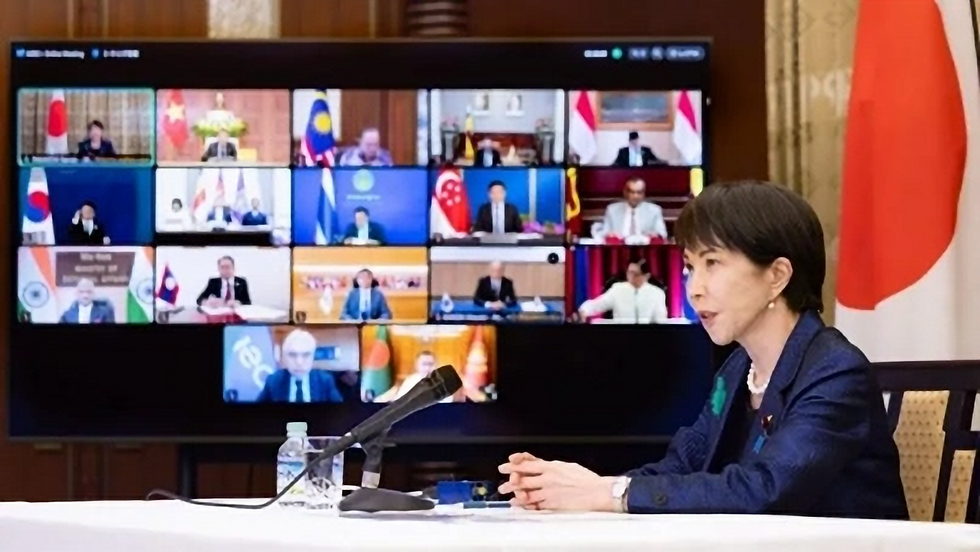
The initiative aims to stabilize regional stockpiles and protect highly interconnected supply chains, particularly for petrochemicals like naphtha, which are vital to the healthcare sector. By actively underwriting regional energy security, Japan is operationalizing the exact models of supply chain resilience and unimpeded maritime transit that both New Delhi and Tokyo championed during the recent 'AZEC Plus' dialogues.
Strategic Minerals and the Indo-Pacific Periphery
Beyond transit security, the partnership is increasingly focused on mitigating supply chain vulnerabilities within critical technologies. Japan's recent technological milestone in February 2026- the successful retrieval of rare-earth mud by the deep-sea research vessel Chikyu- presents new avenues for bilateral collaboration in critical mineral diversification. This economic security doctrine extends to strategic geographies within the Indo-Pacific. Joint initiatives under the "Smart Islands" framework in the Andaman and Nicobar Islands reflect a calculated convergence of civilian infrastructure development and regional maritime domain awareness.
Economic Cooperation, Infrastructure and Sub-National Diplomacy
Bilateral ties extend significantly into domestic infrastructure financing and maritime industrial capacity. Japan remains a primary source of capital and technical expertise for regional development projects in India.
In terms of maritime security, a strategic focus is being placed on the Deendayal Port Authority in the Kandla region in Gujarat. Recent visits by Japanese delegations aim to integrate the region into a broader shipbuilding and repair ecosystem, aligning with India's long-term port-led development strategy. During the interaction, Shri Sushil Kumar Singh, IRSME, Chairman DPA shared a comprehensive overview of the upcoming projects, underscoring their strategic significance in advancing the National Shipbuilding Mission and Maritime India Vision.
The delegation also undertook site visits, gaining firsthand insights into the proposed shipyard locations and development potential at Kandla & Veera.

In terms of healthcare investment, the Japan International Cooperation Agency (JICA) continues to fund critical regional infrastructure. A recent allocation of ₹3,708 crore to the Maharashtra government is intended to overhaul the state's medical education system, nursing services and broader healthcare delivery mechanisms.
In terms of sub-national diplomacy, moving beyond federal engagements, "Sister State" partnerships are emerging as one of the primary vectors for economic and cultural exchange. Recent interactions, such as the high-level dialogues between Maharashtra and Wakayama, alongside the spiritual connectivity promoted through the Uttar Pradesh-Yamanashi "Buddhist Circuit," demonstrate a decentralized approach to foreign policy that anchors the broader strategic partnership in regional socio-economic development.

Recently, India and Japan have also decided for a two-way exchange of human resources. It includes 500,000 personnel in five years, including 50,000 skilled personnel and potential talents from India to Japan at the 2025 India-Japan Annual Summit. Additionally, Japan has invited applications for the LOTUS Programme FY2026, offering nearly 1,000 Indian Master’s, PhD students, and postdoctoral researchers an opportunity to participate in funded research stays across leading Japanese universities and institutions.
Also, it is important to highlight that the bilateral economic architecture is increasingly expanding into emerging technology sectors. The recent inclusion of Indian electric vehicle component manufacturer Tsuyo in a joint India-Japan deep-tech delegation exemplifies a strategic push to synergize India's scalable innovation with Japanese engineering standards, specifically aimed at co-developing resilient global EV supply chains.
The bilateral architecture between New Delhi and Tokyo operates as a multi-dimensional mechanism. By linking domestic infrastructure growth, human resource exchange and sub-national diplomacy with broader regional security frameworks, India and Japan are effectively operationalizing their strategic partnership to address both economic vulnerabilities and geopolitical shifts.
Structural Impediments and Implementation Challenges
Although the robust institutional framework of the "Special Strategic and Global Partnership" exists, several structural challenges constrain the full realization of its potential. Bilateral trade volumes remain heavily under-optimized relative to the economic sizes of both nations (hindered by persistent non-tariff barriers), increasing trade imbalance, differences in corporate cultures and historical risk aversion culture among Japanese small and medium enterprises (SMEs) regarding the Indian market because of the overall business environment.
Challenges such as bureaucratic friction and execution delays frequently disrupt high-profile infrastructure initiatives. Additionally, while strategic alignment exists regarding the Indo-Pacific, balancing their respective economic interdependencies with China and historical relations with other nations introduces a layer of geopolitical complexity. Overcoming these execution deficits and bridging the gap between strategic intent and localized implementation remains the primary imperative for both New Delhi and Tokyo moving forward in this natural partnership.
Nevertheless, it is the shared strategic clarity and decisive leadership under PM Modi and PM Takaichi that offer strong grounds for optimism. Their continued high-level convergence provides the necessary political impetus to navigate these structural headwinds to ensure the bilateral relationship matures into a defining geopolitical axis of the twenty-first century.
About the Author
Kaveri Jain is a doctoral researcher in International Relations at the Amity Institute of International Studies, Amity University, Noida. Her work focuses on India-Japan relations during the Shinzo Abe era. She has presented at academic conferences, published in peer-reviewed platforms and written on various aspects of India-Japan ties, including foreign policy, technology cooperation, cultural exchange, diaspora diplomacy and engagement in the Indo-Pacific region.


Comments